Release Notes
Release Notes
Save time and money with online booking. Reduce administrative burden, no-shows and optimize provider time.
Simplifying Saving Message Templates
March 2026
Introduction
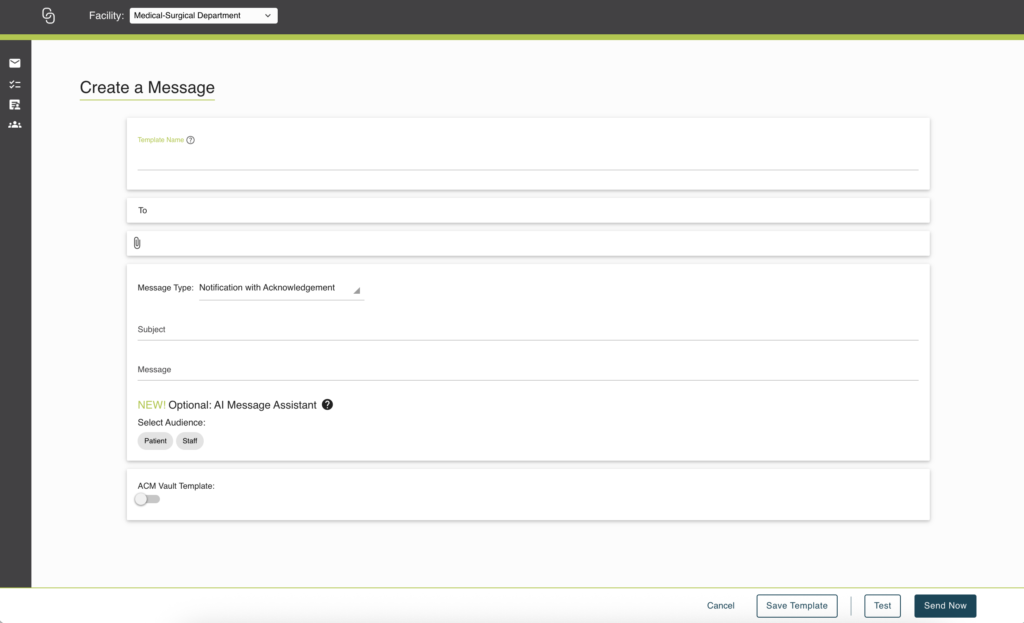
This release simplifies the experience of sending messages in ACM Messenger by separating the “save as template” flow from the message sending flow. Previously, template-saving fields were presented alongside the message sending fields, creating a more complex experience — especially for new users. The updated UI moves template details into a dedicated modal, reducing the number of steps required to send a message and making the process more intuitive.
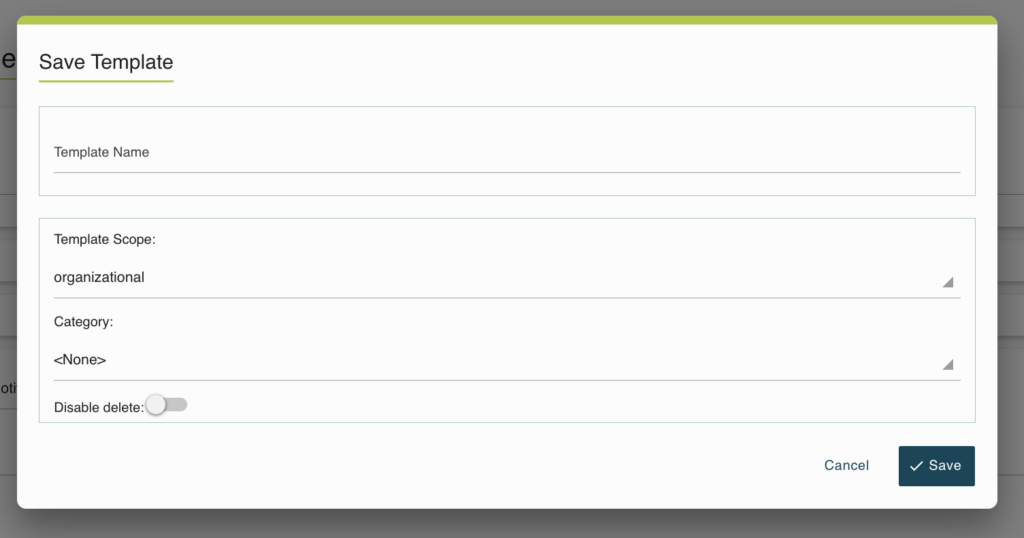
Users can now save a template directly from the template page, or they will be prompted to save after sending a message.
Loom Video: https://www.loom.com/share/a419980153a5425c971192d787ae04c3
Screenshots
Use Cases
- A new ACM Messenger user sends their first message without being confused by template-saving fields
- An existing user sends a message quickly, then chooses whether to save it as a template afterward
- A user navigates to the template page to create a template independently of sending a message
Key Benefits
- Simplified message sending — fewer required fields at the point of sending means less friction for all users
- Faster onboarding — new users can send their first message without needing to understand template management upfront
- Cleaner UI — the separation of concerns between “send a message” and “save a template” makes both flows easier to understand
- Flexible template saving — users can save templates before or after sending, from the template page or via a post-send prompt
Impacted Users
All ACM Messenger users (Medical Clinics and Senior Care segments).
Impacted Products
- ACM Messenger — Medical Clinics
- ACM Messenger — Senior Care
Impacted Pages
Message Builder Page
Features
New Save Template Button
A dedicated Save as Template button is now available at the bottom of the screen within the message composer. This allows users to initiate the template-saving flow independently from sending a message.
New Save Template Modal
Template details — including category and scope — have been moved into a new dedicated modal. The fields remain the same as before; they are simply accessed through this new modal rather than being embedded in the message sending flow. Users are prompted to open this modal either from the template page or after sending a message.
Customer FAQs
When do I want to save a message as a template?
Save a message as a template when you plan to send the same or similar message again in the future. Templates let you reuse message content quickly without having to re-type it each time. You can save a template from the template page or after you send a message.
Why do I need to give my message a template name?
Template names help you and your team identify the purpose or topic of a message when reviewing reports and message history. A clear name makes it easy to find and reuse templates later.
Is there any change in functionality?
No. All the same features are available — only the user experience has changed. Template fields like category and scope are now accessed through a separate modal rather than being shown alongside the send message flow. Nothing has been removed.
Bed Holds (New Filter: Transfer | On Leave)
March 2026
Introduction
This release introduces the required functionality for automated Bed Hold notifications for ACM Senior Living facilities. When a resident is temporarily transferred out of a facility — for example, to a hospital — regulations require that families be notified of the transfer and the facility’s bed hold policy within specific timeframes. Previously, this process relied on manual workarounds or hardcoded logic; staff had to identify transfers, look up contacts, and send individualized messages, creating compliance risk and significant administrative burden. This release replaces that with a fully configurable, UI-driven workflow connected to ADT (Admission, Discharge, Transfer) events in PointClickCare (PCC).
Loom Video:
- Customer Facing Loom Video: Will be provided on release day unless otherwise needed!
- Technical Loom Video:
Regulatory Context
Bed Hold notification requirements stem from federal and state/provincial regulations governing long-term care facilities.
United States — Federal
Under 42 CFR § 483.15(d) — Notice of Bed-Hold Policy and Return, nursing facilities participating in Medicare and Medicaid are required to notify the resident or their representative of the facility’s bed hold policy when a resident is transferred to a hospital or goes on therapeutic leave. The regulation includes two key provisions:
- § 483.15(d)(1) — Notice before transfer: Where operationally possible, the facility must provide written bed hold policy information to the resident or resident representative before the transfer occurs.
- § 483.15(d)(2) — Bed-hold notice upon transfer: Recognizing that many transfers (particularly emergency hospitalizations) occur without advance notice, this provision addresses notification at the time of or following the transfer event.
In practice, most facilities rely on post-transfer notification workflows — notifying family and resident representatives of the bed hold policy after the resident has already been transferred. This is the use case that ACM Messenger’s Bed Hold feature directly supports: automated notification to contacts triggered by ADT transfer events from the EMR. The broader transfer and discharge rights regulation (42 CFR § 483.15) also requires facilities to notify residents and their representatives in writing before any transfer or discharge, including the reason for the move. CMS enforces these requirements under F-Tag F625 (Notice of Bed-Hold Policy).
United States — State
Bed hold policies and notification timeframes vary by state Medicaid program and often provide specific post-transfer notification windows. For example:
- In Michigan, written notification must be provided within 24 hours of hospitalization
- In California, additional state requirements apply under 22 CCR § 72520 and 22 CCR § 51535.1, which address bed hold notification obligations and Medi-Cal bed hold payment for up to 7 days
These state-level timing requirements align closely with ACM Messenger’s workflow, where notifications are triggered after a transfer event is recorded in the EMR. Facilities should refer to their applicable state Medicaid regulations for specific timeframes and requirements in addition to the federal baseline.
Canada
Bed hold and leave-of-absence notification requirements vary by province. Facilities should refer to their provincial long-term care legislation for applicable obligations.
⚠️ Note: This section is provided for context only. Cliniconex does not provide legal or compliance advice. Facilities should consult their compliance teams and applicable regulations to confirm their specific obligations.
Use Cases
- A resident is transferred to hospital; staff configure a bed hold notification using the new Transfer/On Leave status, without any manual contact lookups
- An organization with multiple facilities sends bed hold notifications that correctly capture transfer types across all selected facilities
- A facility administrator configures which ADT action codes trigger bed hold notifications directly in the ACM Messenger UI, without requiring code changes or backend intervention
Key Benefits
- Compliance support — helps facilities meet regulatory notification requirements without relying on manual processes
- Fully UI-driven — replaces hardcoded logic with configurable options; no code changes required to enable or adjust per facility
- Reduced administrative burden — automated triggers eliminate the need to manually identify transfers and look up contact information
Impacted Users
ACM Messenger for Senior Care users with PointClickCare EMR integration. This feature is not available in ACM Messenger for Medical Clinics.
Impacted Products
- ACM Messenger — Senior Care
Impacted Pages
Message Builder (Recipient Filters)
Features
New “Transfer | On Leave” Resident Status
A new Transfer | On Leave status is now available in the ACM Messenger for Senior Care message recipients filters. This status is only visible for customers with a PCC EMR that supports ADT action codes.
Dynamic Transfer Type Selection
When Transfer | On Leave is selected, a new section appears showing all ADT action codes available from the facility’s PCC instance (filtered to Leave-type events). Users can select individual transfer types or use the “All” toggle to capture every applicable event.
Multi-Facility Support
For organizations with multiple PCC facilities, the transfer type list is built from a union of action codes across all selected facilities (deduplicated), ensuring correct behavior regardless of how many sites are selected.
Admin Visibility
Selected transfer types are now displayed in the BulkSendJob detail page, and a “Transfer” label appears in the job summary when transfer types are set — giving admins clear visibility into how bed hold jobs were configured.
Customer FAQs
Who receives the Bed Hold notification?
Notifications are sent to the contacts associated with the resident in your ACM Messenger configuration, following your existing messaging setup.
What are Transfer Types and how do I know which ones to select?
Transfer types correspond to the ADT action codes configured in your PCC instance for leave events. The options shown in ACM Messenger are pulled directly from your PCC setup, so they’ll reflect the terminology your facility already uses.
What if I have more than one PCC facility?
If your organization has multiple PCC facilities, ACM Messenger will automatically combine the transfer type options from all selected facilities into a single list, so you don’t need to configure them separately.
Can bed hold notifications be sent automatically on a recurring schedule — scanning for newly transferred residents each day?
Yes, you can set up a daily scheduled job to scan for patients with relevant status’. Note that with a daily notification, a contact will be notified of the bed hold policy each time a message is sent, until the status changes.
December 2025
PointClickCare (PCC) Integration for ACS Forms and ACS Surveys Submissions: Streamline your documentation workflow with our latest integration. Form and survey submissions sent via ACM Messenger and ACM Alerts now automatically sync to the patient’s chart in PointClickCare, appearing directly in their documents.
Delete Individual ACS Forms and ACS Surveys Submissions: You now have the flexibility to remove specific form submissions, making it easier to clear out test data or entries that are no longer needed. To ensure security governance, we have introduced a specific permission setting for the deletion of submissions. Admins can control which users have the authority to remove data. Visit the help centre to learn how to delete a form.
Export ACS Forms and ACS Surveys Submissions with Attachments in Zip Folders: Manage your data more efficiently with our new export structure. When exporting form submissions that include attachments, the system now generates a zip folder. This ensures all associated files are well-organized and easy to locate. Learn more about how to export and manage your forms and survey data here.
Bitwarden Browser Extension Compatibility: We have resolved a reported issue where the Bitwarden extension caused the Automated Care Platform (ACP) to freeze. Users can now use Bitwarden alongside ACP without performance interruptions.
ACM Vault Message Formatting: We fixed a rendering issue where messages in ACM Vault were appearing as plain text. Vault messages will now display with their intended styling, including functional hyperlinks, perfect for securely sharing links to forms. You can learn more about sending encrypted messages with ACM Vault here.
October/November 2025
ACS Form and ACS Surveys Submission Notification Emails: Stay updated on submissions in real-time. You can now configure email notifications that alert you when a new form is submitted, providing a direct link to a secure page to view the details. Learn how to set this up.
Export ACS Forms and ACS Surveys Submissions in a PDF: You now have an easier way to view forms offline. We have added a dedicated button allowing you to instantly download a PDF copy of any specific form submission to print. See how to download PDF exports.
ACS Forms and Surveys Privileges Refinement: We have introduced more granular controls for better security governance. You now have finite control over permissions for Admins, Managers, and Users for forms, including specific rights to lock/unlock forms, view submissions, export data, and publish forms. Read more about forms privileges.
Accuro Integration for ACS Forms and ACS Surveys Submissions: Eliminate manual data entry for automated workflows. Form submissions sent through either ACM Alerts or ACM Messenger now automatically sync to Accuro and are recorded directly in the patient’s Documents.
ACM Messenger Reports: We have expanded the reporting format to provide a more complete view of your data, including Provider, Patient ID, Location Code, and Appointment Type, and we have corrected the sorting logic. Learn more about ACM Messenger Reports here.
September 2025
2025. ACS. 02 ACS Forms and ACS Surveys
New Product: ACS Forms and Surveys was built to give healthcare organizations and clinics a flexible, compliant tool for collecting and managing digital information.
Who Benefits: Senior care providers, medical clinics, and hospitals by streamlining information collection, improving compliance, and giving patients, residents, families, and staff a simpler, more reliable way to share feedback.
February 2025
2025. ACM. 01 ACM Messenger for Medical
New Product: ACM Messenger for Medical enables clinicians and their teams to reach one, some or all of their patient roster with ease.
Who Benefits: Care teams and patients in primary and acute care settings like family doctors, specialists and hospitals.
2025. ACM. 02 ACM Vault
New Product: Allows ACM Messenger users to send encrypted messages via and two-factor authentication flow for increased privacy and security.
Who Benefits: Providers and patients can confidently send and receive sensitive or confidential information.
2025. ACS. 01 ACS Booking
New Product: Patients can now book with ease online anytime.
Who Benefits: Both patients, who gain convenience and accessibility, and healthcare providers, who improve efficiency and resource management, benefit from online booking.
May 2024
2024.ACM.02 Check SMS Consent Status
New Feature: Check whether a contact has consented to receive text messages.
Who Benefits: All Users. See whether a resident family contact has fully or partially consented, or rejected consent to receive text messages. Respond to their status accordingly.
March 2024
2024.ACM.01 Add New User Button
New Feature: Admins can invite new users via the Add New User Button.
Who Benefits: All Users. Admins can proactively send email invitations to colleagues to log into the system. User then have immediate access – with the correct role and moderation state – without having to wait for approval by an Admin.
More about releases
When will I be able to access new features?
New features and functionalities in Automated Care Messaging are rolled out over a period of time. We alert all users about releases via in-app and external communications.
2023.ACM.06 Recurring Messages
New Feature: Users can schedule a message to be sent on a recurring basis.
Who Benefits: All admins and users with access to Message Options. Set it and forget it with a recurring message. Rather than manually sending the same content, schedule a message to send on multiple occasions or indefinitely on a daily, weekly, monthly or annual basis.
October 2023
2023.ACM.05 Message Assistant
New Feature: Users can leverage AI by writing key points or a rough draft of a message. Then use the prompt buttons or add further instructions to improve content.
Who Benefits: All admins and users. The pressures of writing a well-crafted message are removed as AI does the writing for you. Users can continue to make improvements to messages or return to a previous version.
August 2023
2023.ACM.04 Moderated Messages
New Feature: Role permissions will enable Admins to review messages written by users before they are sent to resident family or staff contacts.
Who Benefits: Administrators. Admins can create workflows to either assign users a review required status, requiring an admin to approve the message before it is sent, or, a reviewer status who can approve, edit or reject a message. This feature enables an organization to add more users to ACM Messenger while maintaining control over content and messaging.
2023.ACM.04 Message Exchange
New Feature: Send a message and request a response back. A dialogue thread is created allowing the sender and receiver to have sustained conversation until the original sender has determined the dialogue is over.
Who Benefits: All admins and users. Senders can request additional information without having to phone or email message recipients. By maintaining control over the length of the back-and-forth dialogue and overall topic, users can limit the access of the resident family member to the care team to specific topics.
May 2023
2023.ACM.03 Scheduled Messages
New Feature: Scheduled Messages give users the ability to schedule a job. There are several options for scheduling:
- Timelapse (set number of days (or hours) in the future)
- Set a specific date and time.
Who Benefits: All admins and users. Rather than send ad-hoc messages, or remember to send time-specific notifications, users can schedule jobs to send messages when it is relevant to the situation or audience (e.g., birthdays, monthly newsletters, incremental discharge wellness check-ins, etc.)
March 2023
2023.ACM.02 SMS Text Consent
New Feature: Collect recipient consent using an automated telephone message. This will be a two-step process that will first ask recipients to consent to receive SMS text messages over the telephone. Once granted, there will be a follow-up SMS text message asking the recipient for confirmation of consent.
This consent is only required once. If refused, future messages will be sent by telephone. Consent via SMS text message can be refused at any time.
Who Benefits: All users new to ACM Messenger as of January 2023.
March 2023
2023.ACM.01 Template Categories
New Feature: An updated Template Library makes it easier for users to select and import default templates to their organizations and facilities. The new Template Category feature will enable users to organize and group their templates by topic or use case, adding and removing templates as they see fit.
Who Benefits: All users. Grouping templates by categories allows users to not only find and manage their templates, but it also provides a cleaner experience. Furthermore, users can now choose from a variety of templates to automatically import to their organization’s library, removing the need to copy and paste templates from the Help Center.
More about releases
When will I be able to access new features?
New features and functionalities in Automated Care Messaging are rolled out over a period of time. We alert all users about releases via in-app and external communications.
October 2022
2022.ACM.07 Message types and reporting
New Feature: Message types enables users to ask questions, survey or poll recipients and follow up with timed reminders based on the recipient’s response (or lack of response).
Enhanced reporting and analytics allows users to view the result of sent messages in-app, and take follow-up action through advanced sorting and filtering functions, while analytics lets users visualize message responses and engagement.
Who Benefits: Any user who wants to enhance the value of a message by providing additional context or information that cannot be expressed in the body of a message.
September 2022
2022.ACM.06 Attachments
New feature: The attachments feature allows users to add attachments to outgoing messages.
Who Benefits: Any user who wants to enhance the value of a message by providing additional context or information that cannot be expressed in the body of a message.
August 2022
2022.ACM.05 Multi-Facility Sends
New feature: The multi-facility send feature will allow users to select and send a message to several or all facilities within an organization simultaneously.
Who it benefits: Any user with access to multiple facilities. The new feature provides a filter allowing users to select more than one facility as the target audience for either resident or staff messages.
June 2022
2022.ACM.04 Message Printing
New feature: New “Printable Version” button has been added to the Sent Message popup within ACM Messenger. It shows a more printable version of the jobs message and provides a convenient print button.
Who benefits:
- Printer-friendly messages are designed to fit on an 8.5″x11″ or A4 sheet and include only the content (plain text and images) of the message, along with relevant message source information.
- Printer-friendly messages that can also be used for electronic storage by printing as a PDF (rather than selecting a printer).
April 2022
2022.ACM.03 Resident Status
New feature: Senior care homes can now send direct messages to targeted contacts with new filters for Resident Status using enhanced Message Options for New, Current and Discharged residents. Additional filters include Waiting List Status, Payer Type and Patient Care Type, Discharge Date and Discharge Reason. You can also find new Resident Status templates available in the Template Library.
Who benefits: Organization and facility administrators, as well as users wishing to segment contacts by Resident Status. Specifically, facilities can now communicate with discharged residents to ensure they are aware they are welcome back to the facility, resulting in:
- Payment to the facility now assured by Medicare; and,
- Eliminating penalties to the home, hospital, etc. (where readmissions/emergency room visits may result in fines).
2022.ACM.02 Direct Messaging
Feature enhancement: Senior care homes can now send direct messages to one or more targeted contacts by using a new Recipient Type filter to select specific individuals by name, as well as Message Options filters for unit name, resident status or resident ID. Homes can also request and manage consent and communication channel preferences by resident and family contacts.
Who benefits: Organization and facility administrators, as well as users who send messages no longer need to remember, should a resident change location (i.e. floor or room), as they can now select recipients by name. Permissions for direct messaging can be set by user-based roles.
Note: A default consent request message is provided in ACM Messenger, and is configurable to suit the needs of the facility
More about releases
When will I be able to access new features?
New features and functionalities in Automated Care Messaging are rolled out over a period of time. We alert all users about releases via in-app and external communications.